
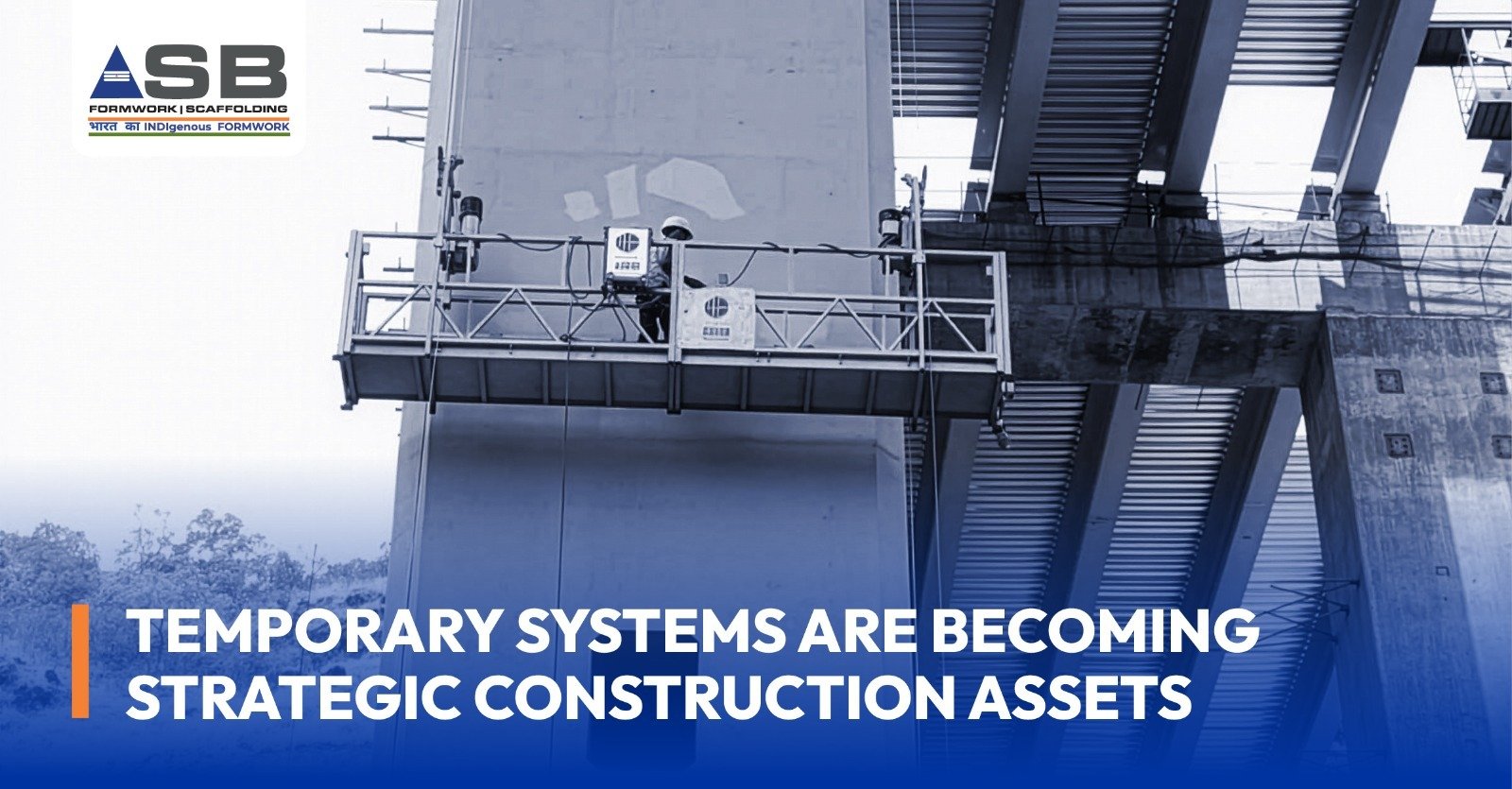
Construction has traditionally viewed temporary systems as costs that need to be controlled and minimised. They were seen as short-term necessities rather than long-term contributors to project performance.
That perspective is changing. Across leading projects, temporary systems are increasingly being treated as assets that influence how efficiently a structure is built.
The Evolution of Temporary Works
- Aluminium formwork systems are no longer limited to the role of shuttering. They play a direct role in improving floor cycle times, ensuring dimensional accuracy, and reducing the need for repeated corrections.
- Access systems have evolved beyond basic movement solutions. When planned correctly, they help structure daily workflows, reduce congestion, and allow multiple activities to run in parallel without interference.
- Wingspan systems allow safe and stable operations beyond the building line. Engineered external working platforms extend usable work areas at height, reducing dependence on improvised solutions.
This change in approach is subtle, but its impact is significant.
- Reusable systems reduce long-term costs by minimising material waste and repeated fabrication.
- Engineered platforms improve safety while expanding functional working areas.
- Integrated access planning supports better coordination between trades, reducing idle time and execution gaps.
Strategic assets do more than support construction. They shape outcomes. Projects that invest in system-based temporary works consistently experience fewer delays, better cost predictability, and greater confidence during execution. Decisions become proactive rather than reactive, and sites operate with greater discipline.
Temporary does not mean disposable. In modern construction, temporary systems function as strategic infrastructure that determines how effectively permanent structures come together.