
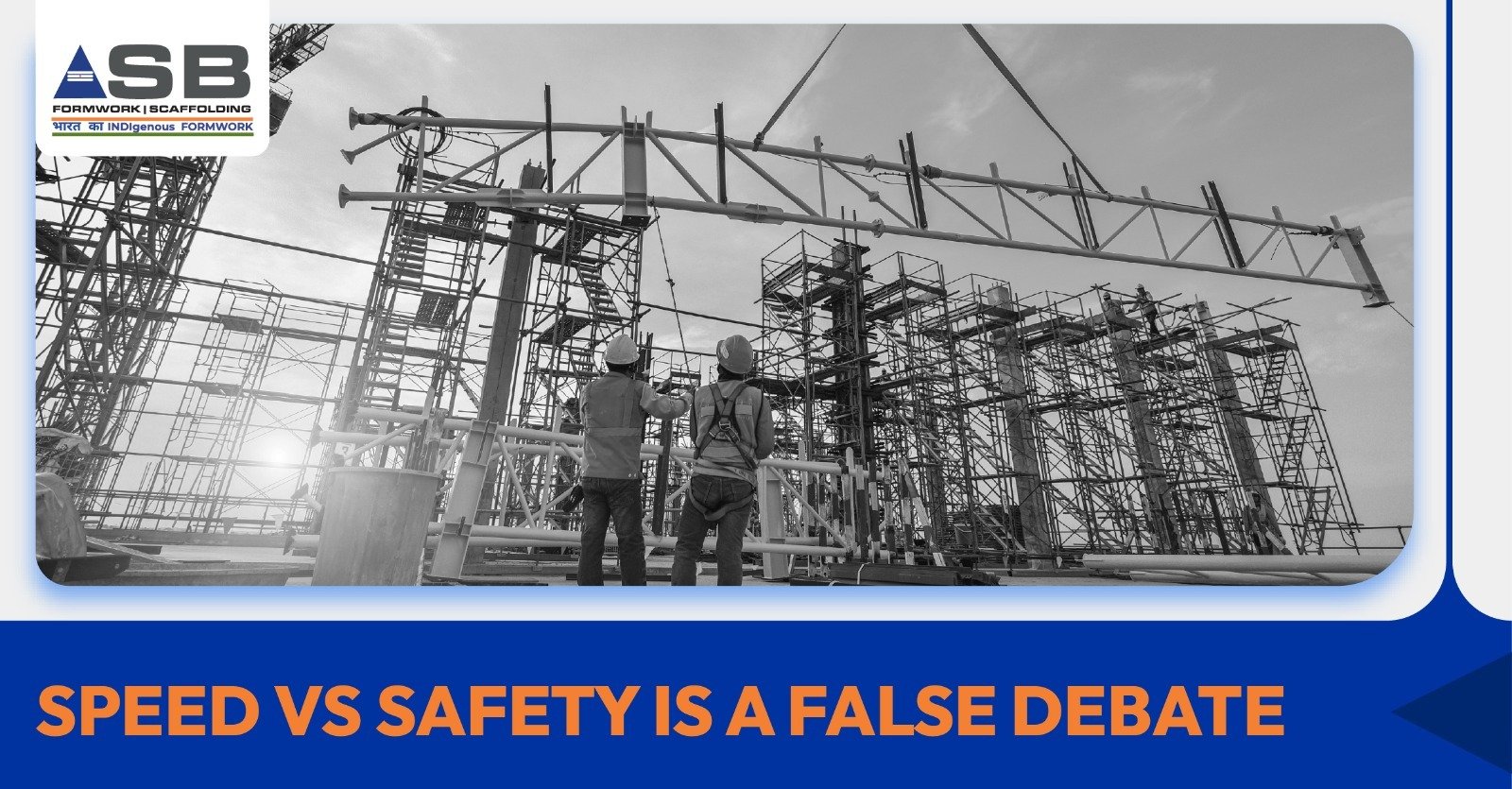
One of the most persistent myths in construction is that speed and safety are opposing forces. Push timelines, and safety suffers. Enforce safety, and progress slows.
In reality, this trade-off only exists when systems are poorly planned. Projects that rely on improvised scaffolding, inconsistent access routes, and inefficient formwork setups often experience delays because safety incidents, stoppages, and rework interrupt progress.
True speed comes from predictability.
Aluminium formwork systems enable faster floor cycles not by rushing work, but by ensuring consistency. Repeatable shuttering layouts reduce errors, minimise corrections, and allow teams to work with confidence. Similarly, well-designed scaffolding systems don’t slow sites down, they organise them. Clear access paths reduce congestion, improve material movement, and allow multiple activities to happen in parallel.
The Synergy of Safety and Speed
- When workers feel safe, they move faster.
- When access is clear, productivity increases.
- When systems are stable, supervision effort reduces.
Globally, high-performing projects don’t choose between speed and safety. They design for both from the start.
Speed and safety are not competitors. They are outcomes of the same thing: planned execution systems.